 BestAIFor
ChatGPT vs DeepSeek: Which Free AI for Beginners is Smarter?
ChatGPT and DeepSeek are two leading free AIs for beginners. This guide compares their features, writing skills, and ease of use to help you choose.
January 20, 2026•8 min read
Sit down. Drink your espresso. We need to talk about 2026, and we need to do it without the marketing fluff that’s currently clogging up your LinkedIn feed. Look, I’ve been in the digital trenches for twenty years. I’ve seen every "game-changer" come and go. But what’s happening now with AI isn't just another trend, it's a fundamental shift in how we work.
A fractional AI employee system is a modular approach where specialized AI components replace manual tasks in an integrated workflow. Instead of independent chatbots, you build an AI “team”: one model for reasoning (Brain), others for perception (Voice) and execution (Hands). This orchestrated design delivers cohesive, automated outcomes.
To actually thrive this year, you don’t need a list of apps; you need a system. I call it the "Fractional AI Employee". It’s a modular stack where you stop prompting and start orchestrating. You need a Brain for reasoning, a Voice for perception, and Hands to actually do the work.
If you’re still firing off isolated queries in a dozen different chat windows, you’re losing. Are you building a workforce, or are you just collecting bookmarks?
Pick a foundation model based on your needs: If you need high reasoning and large context, use GPT-4 Turbo (128K tokens) or Meta’s Llama 3.3 (128K). For cost-efficiency, consider Mistral 3 (8B) (262K tokens) or open-source Llama (free, 128K). Match raw power vs. efficiency vs. privacy.
Here’s a consultant’s secret: most people are overpaying for "intelligence" they don’t actually use. It’s really, really expensive to get this wrong if you're running high-volume tasks.
| Model | Price (USD per 1M tokens) | Context Window | Best For |
|---|---|---|---|
| GPT-4 Turbo (OpenAI) | $10 (input) / $30 (output) | 128K tokens | General-purpose high-level reasoning, creative tasks |
| Mistral 3 8B Instruct | $0.15 (input/output) | 262K tokens | High-volume, efficient tasks (with vision) |
| Llama 3.3 70B Instruct | $0.20 (input/output) | 128K tokens | Multilingual dialogue and open research |
| Claude 3 Opus (Anthropic) | $15 (input) / $75 (output) | 200K tokens | Complex reasoning, safety-critical workflows |
Incorporate Multimodal AI to extend your system beyond text. For image/video analysis, use vision-enabled models to “see” diagrams or meeting footage. For audio, use speech-to-text and voice-cloning to “hear” conversations. This lets your AI employee interpret visuals and sound as naturally as text.
Your digital employee shouldn't be blind. If you’re in marketing or education, HeyGen is non-negotiable. It turns text scripts into AI avatar videos that actually look human. It allows you to scale personalized video faster than you could ever film it. In 2026, if your AI "employee" can’t speak the local language of your client, you’re behind the curve.
Yes. Platforms like Make.com act as the “connective tissue” between your AI tools and applications. By 2026, it supports agentic workflows that not only trigger tasks but autonomously handle exceptions. These workflows self-monitor and retry on errors, turning simple automations into robust AI-driven processes.
This is where most people fail. They have a "Brain" but no "Hands". Make.com is the connective tissue. These systems don’t just "trigger" a task; they monitor it. If an API call fails or the data looks weird, the agent loops back and tries a different approach until it gets it right.
Solo Entrepreneurs: Combine a strong LLM brain (GPT-4o) with creative tools (HeyGen, Midjourney) and use Make.com for the workflow "glue".
Marketers: Focus on HeyGen for avatars, Midjourney for visuals, and Make.com to trigger content generation when leads arrive.
Mainstream Users: Stick to the easy wins: ChatGPT (GPT-4o) for emails and GitHub Copilot for code.
Use specialized tools when needed. Creators should switch to niche AIs like HeyGen for video. Developers should move from general chatbots to purpose-built tools like GitHub Copilot. Students should use Socratic tutor AIs like Khanmigo that guide learning rather than just providing answers.
Stop asking AI to write your essays—it’s obvious and lazy. Use Socratic tutors like Khanmigo. They prompt you to think rather than just handing over the answer. Developers, if you aren't using GitHub Copilot or tools that can review your entire repo, you’re working too hard.
Onboarding requires planning: inventory tasks, integrate step-by-step, and monitor results. Establish a feedback loop to review outputs and adjust prompts or connectors over the first 30 days. Balance costs by tracking API credits and enforce governance to prevent Shadow AI leaks.
You wouldn't hire a human without a plan, so don't do it with AI. Watch out for Shadow AI—if you don’t give your team approved tools, they’ll use unauthorized ones with your private data.
System over Software: Stop collecting tools and start building an integrated workforce.
Role-Based AI: Assign specific models as the Brain, Voice, or Hands.
Agentic Power: Use Make.com to build workflows that can self-correct and handle complexity.
Governance Matters: Prevent Shadow AI by centralizing your stack and monitoring costs.
What is the "Fractional AI Employee" system? It is a modular approach where you coordinate different AI models to handle specific roles, reasoning, perception, and execution, as a single automated team.
Which model is best for the "Brain"? It depends on your budget and needs. GPT-4 Turbo is the heavy-hitter for reasoning, while Mistral 3 (8B) is the workhorse for high-volume, low-cost tasks.
How do I prevent "Shadow AI"? Enforce clear policies, centralize your approved AI stack, and provide employees with the tools they need so they aren't tempted to use unverified apps with sensitive data.
Is Make.com better than Zapier in 2026? For agentic workflows, Make.com is often superior because of its visual logic and ability to handle autonomous loops and error corrections.
ChatGPT and DeepSeek are two leading free AIs for beginners. This guide compares their features, writing skills, and ease of use to help you choose.
Master advanced prompting techniques 2026 like Chain-of-Thought and Self-Ask to get better results from ChatGPT, Grok, and Gemini.
An accessible overview of the history of artificial intelligence, from early theoretical ideas to modern deep learning.
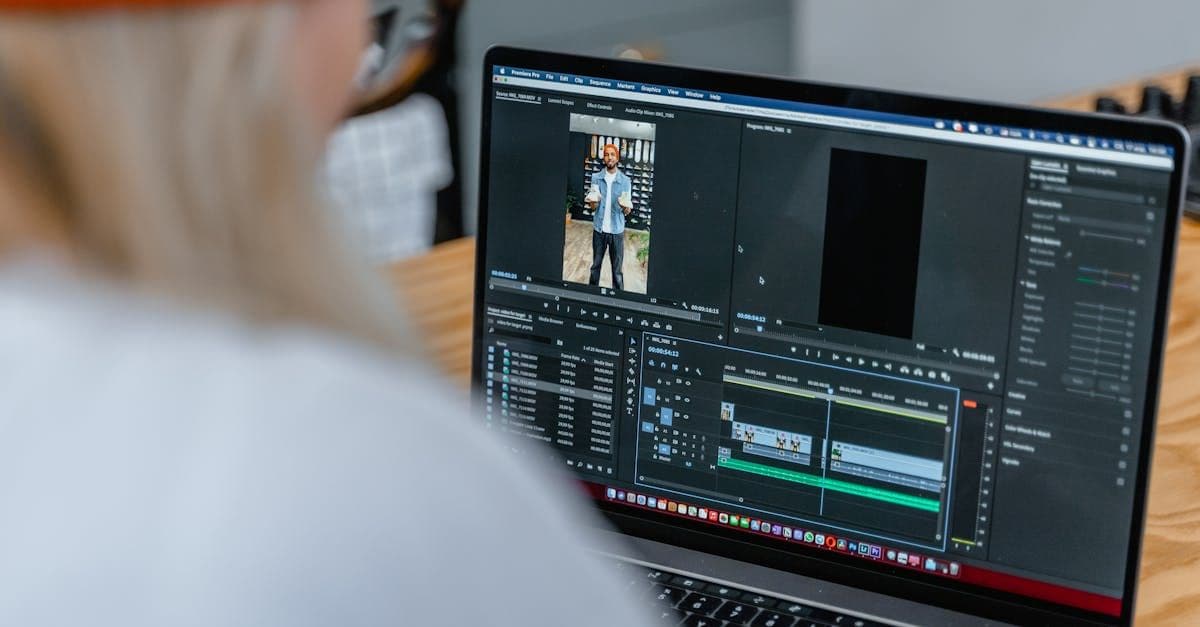
In 2026, mainstream content creators and new AI adopters have powerful AI video tools at their fingertips.
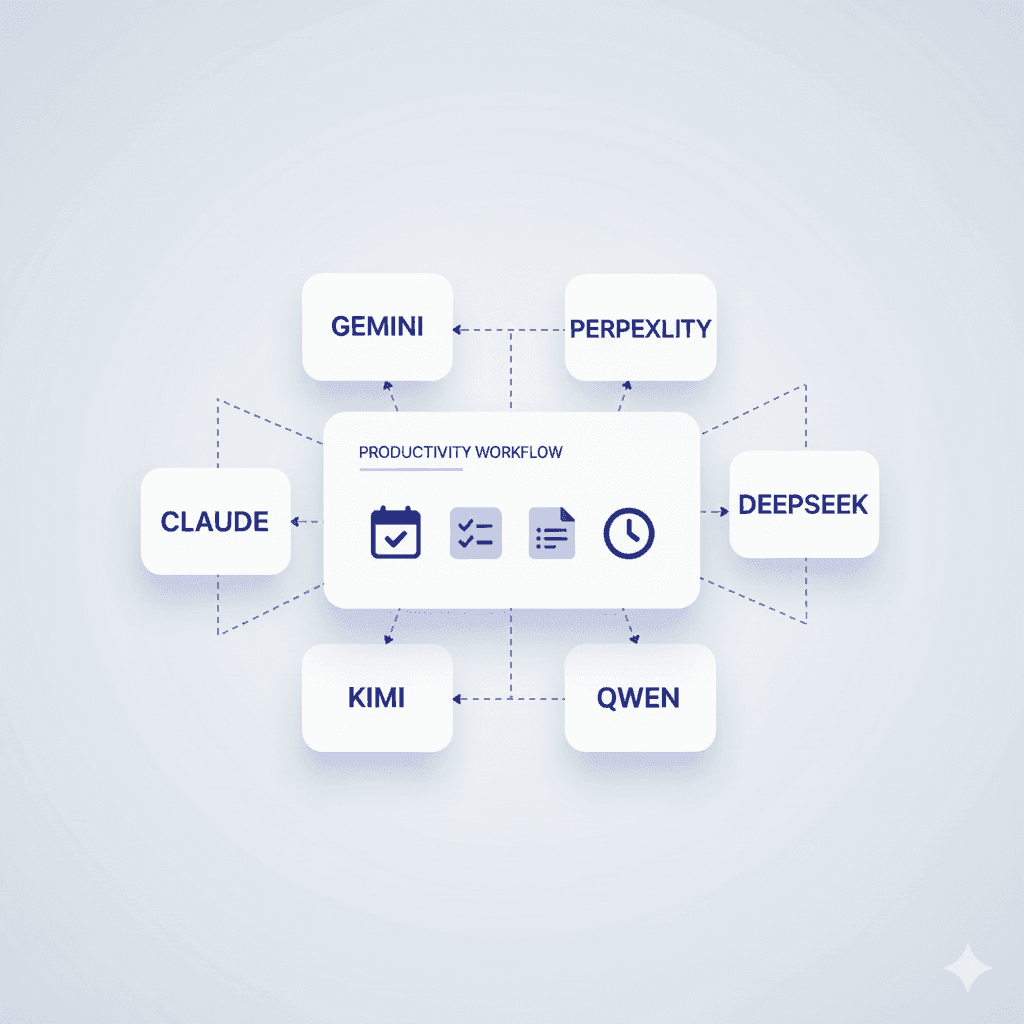
Discover the most powerful AI productivity tools for 2026, including Gemini, Claude, and top emerging alternatives.
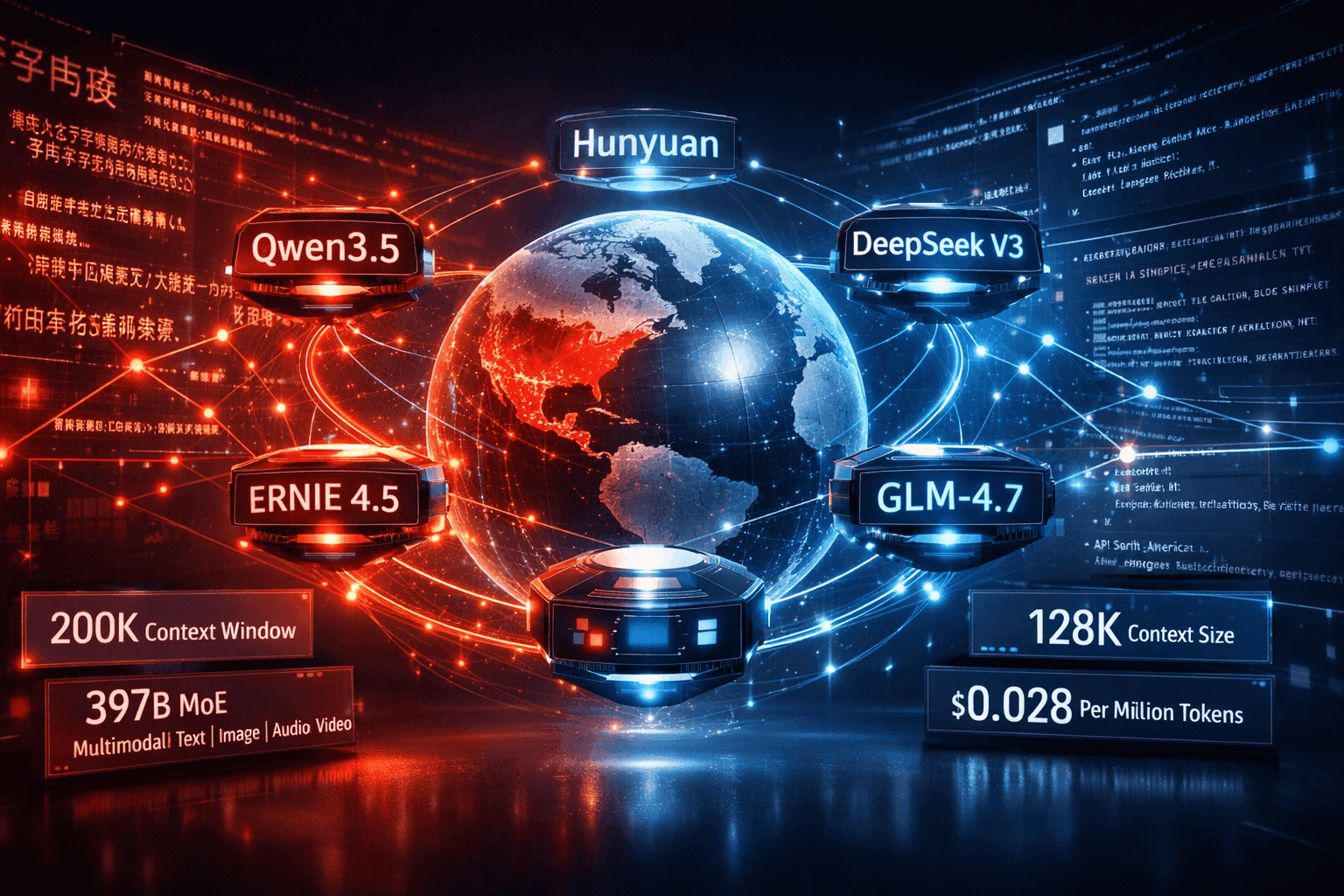
China LLMs 2026: Qwen vs DeepSeek vs ERNIE vs Hunyuan Compared
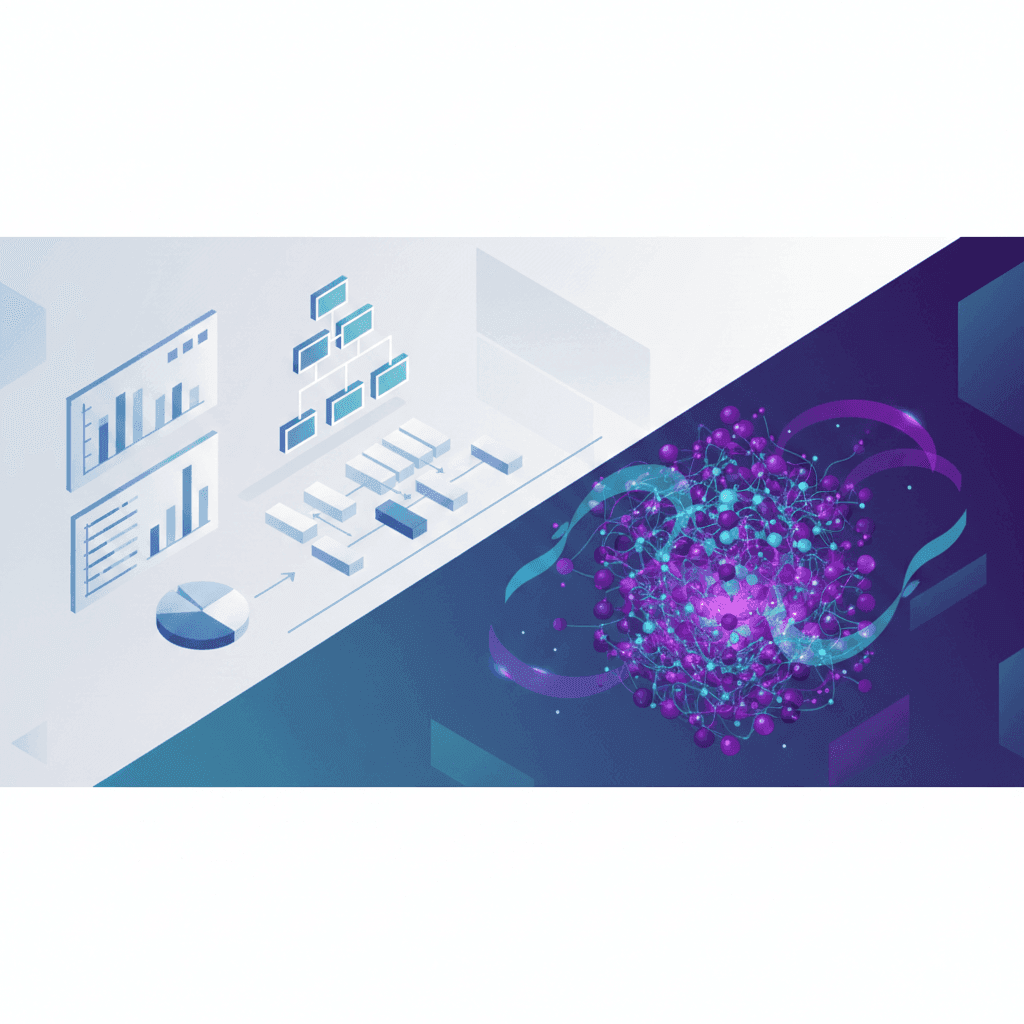
Machine learning vs deep learning explained with clear differences, real world use cases, and guidance for beginners and professionals

Explore 12 hands-on AI for Students hacks in 2026—from flashcard tutors to auto-lit reviews—to boost focus, save time, and learn smarter
Muck Rack's 2026 journalism survey found 82% of journalists use AI, up from 77%. But concern about unchecked AI rose 8 points to 26%. Here is what the numbers mean for editorial teams.

The News/Media Alliance signed a 50/50 AI licensing deal with Bria covering 2,200 publishers on enterprise RAG queries. The split sounds equitable. Bria controls the attribution algorithm.
The Dallas Fed's February 2026 analysis shows entry-level positions fell 16% in top AI-exposed industries while experienced workers' wages rose 16.7%. The split is structural, not temporary.

ARC-AGI-3 launched March 26, 2026. Every frontier model scored below 1%: Gemini 3.1 Pro Preview led at 0.37%, GPT-5.4 at 0.26%. Here’s what the interactive agentic benchmark reveals about current AI reasoning limits.

Newsquest runs up to 30 AI-drafted stories a day via 30 AI-assisted reporters. Reuters Institute: 67% of publishers haven't saved jobs from AI yet. Here's what the workflow actually looks like.
Most AI users are still doing prompt engineering in 2026. Context engineering — feeding the right information at the right time — is the upgrade your workflow needs. Two copy-paste patterns included.

The early-user problem in B2B SaaS is solved by manual work, direct relationships, and ruthless prioritization — not marketing funnels or growth hacks. The tactics are well-documented and consistently replicated....

Tech firms blamed 47.9% of 78,557 Q1 2026 layoffs on AI. An NBER survey of roughly 6,000 executives found 90% reported no workforce impact. The gap matters, and this piece explains why.
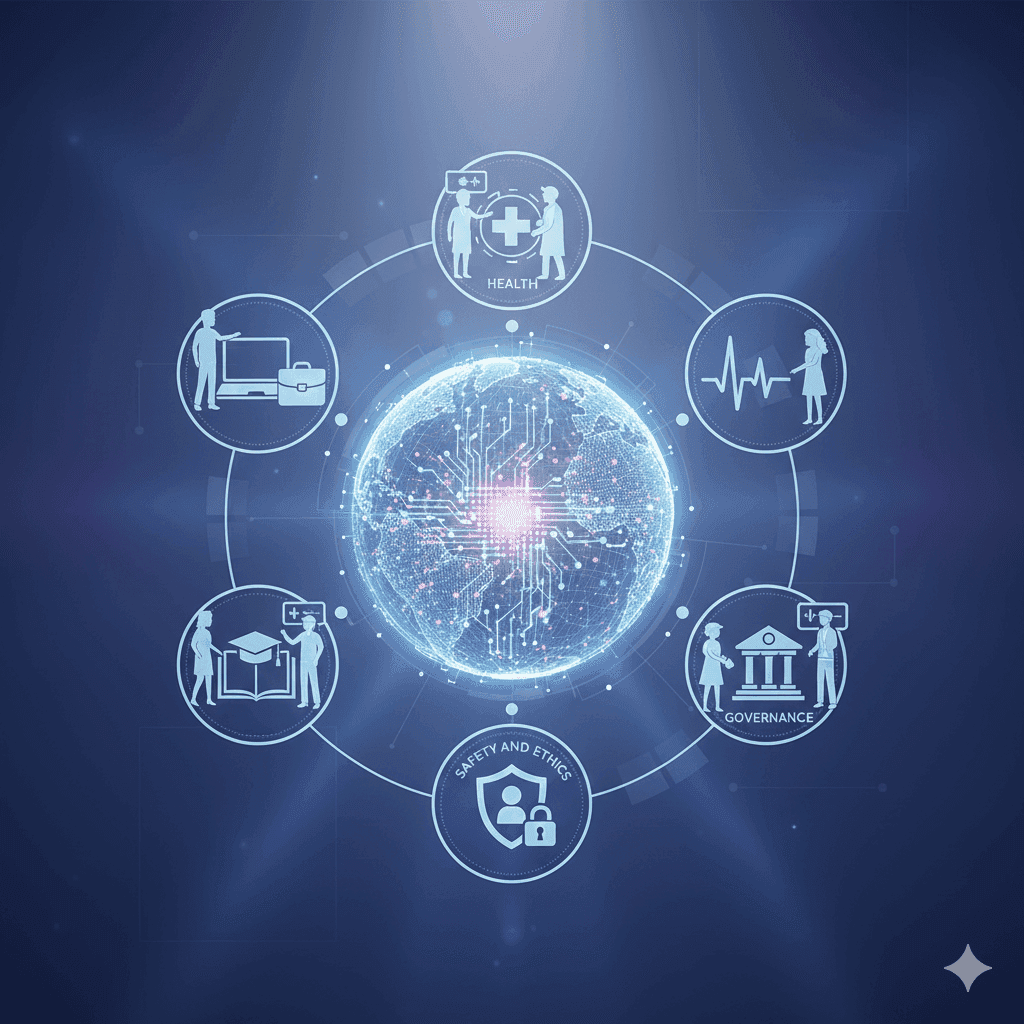
A beginner-friendly look at how AI may reshape work, health, education, and governance from 2026 to 2031

AI Model Benchmarking: What Claude Sonnet 4.6's Token Surge Reveals

EU Commission missed its February 2026 AI Act guidance deadline. EU Council now proposes pushing high-risk AI enforcement to December 2027. Only 8 of 27 member states have enforcement authorities in place.
Z.ai’s GLM-5 scores 77.8% on SWE-bench Verified and 62.0 on BrowseComp, nearly doubling Claude Opus 4.5’s 37.0. First open-weights model above 50 on the Artificial Analysis Intelligence Index.

EU Digital Omnibus removes mandatory risk assessments for high-risk AI — including hiring tools — and delays August 2026 compliance with no fixed date. Amnesty calls it an unprecedented rollback of EU digital rights.

Three Chinese LLMs — DeepSeek-V3, Qwen2.5-Coder, and Kimi k1.5 — have each made distinct training bets, and the benchmark divergence is now large enough to matter when selecting a model for production. Coding...

Frontier model benchmark scores climbed between 8 and 45 percentage points across MMLU, SWE-bench, and ARC-AGI over the past 12 months. Workflow impact is real but concentrated — reasoning tasks and agentic code...

SWE-bench scores for top coding agents now clear 70%. Inside Databricks' production codebase—millions of lines spanning distributed systems, Scala runtime code, and internal APIs built over a decade—those numbers...
AI-generated disinformation is hitting journalism at its most economically fragile moment in decades. The documented damage — contracting newsrooms, collapsing audience trust, synthetic content that outpaces...
![Elastic Attention Cores for Scalable Vision Transformers [R] image](/_next/image?url=https%3A%2F%2Fbestaifor.s3.eu-west-1.amazonaws.com%2Felastic_attention_cores_for_scalable_vision_transf_featured_7a30bc1faf.jpg&w=3840&q=75)
This paper introduces VECA (Visual Elastic Core Attention), a vision transformer that eliminates direct patch-to-patch attention entirely, replacing it with a fixed set of learned core tokens that mediate all...

memoket-kite is an open-source long-term memory engine for AI agents that eliminates the embedding stack entirely and reports state-of-the-art results on the LoCoMo benchmark. The case against vector-based memory at...