 BestAIFor
DoNotPay A Revolution in Legal Tech
DoNotPay popularized the idea of a robot lawyer for everyday problems like tickets, refunds, and forms.
January 28, 2026•3 min read

China's open model wave (DeepSeek, Qwen, GLM) provides access to model weights, but "open" varies by provider. Most use Apache 2.0 or custom licenses with commercial restrictions. Before deployment, check weight access levels, fine-tuning permissions, and export compliance requirements.
DeepSeek R1's weight release in January 2025 changed what developers expect from China open source LLMs. You can download 671B parameters, run inference locally, and fine-tune without hitting API rate limits. But the "open" label means different things across Chinese model providers.
This creates a decision problem. Teams evaluating China open models need to parse licensing terms, understand what files they're actually getting, and assess deployment risks that don't exist with Western equivalents. A model marketed as open-source might restrict commercial fine-tuning, prohibit certain geographies, or require attribution that breaks your workflow.
Here's what you need to know before integrating a China open source LLM into production.
The term gets used three ways, and providers aren't always clear about which one applies.
Open weights means you can download the trained model parameters. DeepSeek, Qwen 2.5, and GLM-4 all provide this. You get the checkpoint files that let you run inference without API calls. Most teams start here because it eliminates runtime costs and gives you control over model behavior.
Open source traditionally means you also get training code, data pipelines, and reproduction instructions. Few China models meet this bar. DeepSeek R1 published training code and methodology, making it the closest to true open source in early 2025. Qwen provides some training scripts but not the full data pipeline. GLM releases weights only.
Open license means minimal restrictions on how you use the model. This is where differences matter most. MIT and Apache 2.0 licenses allow commercial use, modification, and redistribution with few limits. Custom licenses from China providers often add restrictions around user scale, competitive applications, or geographic deployment.
The gap between marketing and actual permissions trips up teams who assume "open weights" equals "use however you want."
When you download a China open model, you're getting different components depending on the provider.
Standard weight release includes:
What's typically missing:
DeepSeek R1 breaks this pattern. The January 2025 release included training code, reinforcement learning implementation, and detailed methodology docs. You can't fully reproduce the model without their compute cluster, but you can adapt their training approach for your own models.
Qwen 2.5 provides model weights and inference code under Apache 2.0. The training code is partially available, but pre-training data remains proprietary. This matters if you're trying to understand model behavior on edge cases or debug unexpected outputs.
GLM-4 gives you weights and a basic inference wrapper. No training code, no evaluation suite. You're expected to use it as-is or fine-tune on your own data.
License terms determine what you can legally do with the weights.
Permits commercial use, modification, and redistribution with minimal restrictions. You can:
The MIT license is the most permissive you'll find. DeepSeek doesn't restrict commercial deployment scale or require revenue sharing. This makes R1 comparable to Meta's Llama in terms of usage freedom, though Llama uses a custom license with minor attribution requirements.
Apache 2.0 allows commercial use but Alibaba's model card adds a restriction: applications exceeding 100 million monthly active users need a separate commercial license. For most teams, this threshold is irrelevant. If you're approaching 100M users, you're negotiating enterprise terms anyway.
The license permits:
What it restricts:
GLM uses a custom license that's more restrictive. You can download weights for research and internal business use, but commercial deployment requires explicit permission. The license prohibits:
This makes GLM suitable for internal tools but problematic for customer-facing applications. If you're building a chatbot for your support team, you're fine. If you're selling AI-powered software to customers, verify terms with Zhipu first.
| Model | License Type | Commercial Use | Fine-Tuning | Model Distillation | User Scale Limit |
|---|---|---|---|---|---|
| DeepSeek R1 | MIT | Unlimited | Yes | Yes | None |
| Qwen 2.5 | Apache 2.0 + addendum | Yes* | Yes | Yes | 100M MAU threshold |
| GLM-4 | Custom Zhipu | Restricted** | Yes | Limited | Approval required |
| Llama 3.1 | Meta License | Yes* | Yes | Yes | 700M MAU threshold |
| Mistral | Apache 2.0 | Yes | Yes | Yes | None |
*Requires license review for large-scale deployment
**Internal use permitted, customer-facing applications need approval
Match the model to your deployment constraints, not just performance benchmarks.
For prototyping and research: All three models work. Download weights, run locally, experiment freely. License restrictions apply at deployment, not during development. Qwen 2.5's documentation makes it easier to get started if you're new to self-hosted LLMs.
For internal business tools: DeepSeek R1 or Qwen 2.5. Build chatbots for support teams, generate reports from internal data, or automate document processing. You're not approaching the 100M user threshold with internal tools, so Qwen's restriction doesn't apply. GLM works here too, but verify your use case doesn't count as "competitive application" under their terms.
For customer-facing products: DeepSeek R1 is the clearest choice. MIT license removes uncertainty about commercial deployment rights. If you're building a SaaS product where AI is a core feature, you want minimal legal friction. Qwen works if you're confident you won't hit 100M users without enterprise contract renegotiation.
For model distillation: DeepSeek R1 and Qwen 2.5 explicitly permit this. Generate outputs from the large model, use them to train a smaller, faster model you control. This is common when you need edge deployment or want to reduce inference costs. GLM's license is ambiguous on distillation—verify with Zhipu before starting.
For fine-tuning on sensitive data: Self-hosted China models work if you need to keep training data on-premises. Healthcare, financial services, and government contractors often can't send data to external APIs. Download the weights, fine-tune in your own environment, deploy without data leaving your infrastructure. Make sure your compliance team reviews both the model license and export control implications.
Getting weights is step one. Making them work in production requires infrastructure decisions.
Full fine-tuning retrains all model parameters on your data. This gives maximum customization but requires significant compute. For DeepSeek R1 (671B parameters), you need multiple high-end GPUs and days of training time. Most teams can't justify this for domain adaptation.
LoRA (Low-Rank Adaptation) trains small adapter layers while freezing base model weights. You can fine-tune a 70B parameter model on consumer GPUs in hours instead of days. Qwen provides LoRA examples in their GitHub repo. This is the practical path for most production fine-tuning.
Prompt engineering doesn't modify weights but treats the base model as-is and optimizes inputs. If your use case needs light customization, this avoids fine-tuning infrastructure entirely. Works well with all three models.
Local inference runs the model on your own servers. You need:
DeepSeek published recommended serving configurations that help with capacity planning. Qwen's model cards specify memory requirements per batch size. GLM provides less deployment guidance—you're expected to figure it out.
Cloud deployment uses managed infrastructure (AWS, Azure, GCP) but you still control the model. Upload weights to your cloud account, configure autoscaling, pay for compute instead of buying hardware. This works for variable workload patterns where buying GPUs doesn't make financial sense.
Hybrid keeps the model in your data center but uses cloud for overflow traffic. Useful when compliance requires on-premises processing but you need burst capacity for peak loads.
Running a 671B parameter model at full precision is expensive. Quantization reduces memory and compute requirements by representing weights with fewer bits.
INT8 quantization cuts memory use by half with minimal accuracy loss. Qwen models handle this well. DeepSeek R1 supports INT8 but benefits more from INT4.
INT4 quantization reduces memory by 75% but introduces more accuracy degradation. Test carefully on your use case before deploying. GLM-4 has official INT4 quantized versions.
The tradeoff: smaller models run faster and cheaper, but you lose some reasoning capability. For straightforward tasks like classification or extraction, INT4 works fine. For complex reasoning, stick with INT8 or full precision.
Licensing is one risk dimension. Operational and compliance risks matter just as much.
U.S. export controls restrict transferring certain AI technologies to China. The reverse also applies—China restricts exporting some AI capabilities abroad. This creates gray areas for teams deploying China-origin models.
If you're a U.S. company: Using a China open model doesn't automatically trigger export controls, but deploying it in certain applications might. Dual-use technology (civilian and military applications) faces tighter scrutiny. Check with legal counsel before deploying China models in defense, aerospace, or critical infrastructure applications.
If you're operating in multiple regions: Verify whether your deployment violates local AI regulations. The EU AI Act classifies some AI systems as high-risk, requiring conformity assessment regardless of model origin. China models aren't inherently problematic, but you need to document your compliance process.
China models trained on Chinese internet data have different safety characteristics than Western models.
DeepSeek R1 and Qwen include content filtering, but the boundaries differ from OpenAI or Anthropic's models. Political topics related to China may be handled differently. If you're building a consumer product, test thoroughly on edge cases before launch.
Some teams run dual filtering: the China model generates outputs, then a second model checks for unsafe content using Western safety standards. This adds latency but reduces risk of unexpected model behavior reaching end users.
Open weights don't come with guaranteed updates or bug fixes. If DeepSeek discovers a vulnerability or bias issue, they might release a new version, but you're responsible for upgrading your deployment.
Western providers like Anthropic and OpenAI automatically update their API-based models. With self-hosted open models, you own the update cycle. Budget time for monitoring new releases, testing updated weights, and deploying upgrades.
Training data for China open models is typically not disclosed. You don't know what copyrighted content might be in the training set. If you're in a litigation-sensitive industry, this creates IP risk that doesn't exist with providers who document their training data sources.
Some teams accept this risk because model performance justifies it. Others stick with models that publish data provenance. There's no universal answer—it depends on your organization's risk tolerance.
Beyond licensing, operational differences shape which models work for your use case.
Western models (Llama, Mistral, Gemma) generally provide better English documentation. Model cards are detailed, API examples are comprehensive, community troubleshooting resources are extensive.
China models prioritize Chinese documentation. DeepSeek and Qwen have English docs, but they're often translations with missing context. If your team doesn't read Chinese, expect to spend more time decoding error messages and configuration options.
Llama has the largest open model community. Thousands of fine-tuned variants, deployment guides, and integration tools exist. If you hit a problem, someone probably solved it already.
China models have active communities too, but primarily on Chinese platforms (Zhihu, WeChat groups, Chinese GitHub). English-language resources are growing but remain limited compared to Llama's ecosystem.
Benchmarks show China models performing well on English, but practical experience varies. DeepSeek R1 handles English coding tasks effectively. Qwen 2.5 works for English content generation. Both are trained on multilingual data, so they're not English-only models translated from Chinese.
Edge cases reveal training data biases. Western cultural references, idioms, and context may not generate as accurately as with Llama or Mistral. Test on representative samples of your actual use case, not just benchmark datasets.
China models often ship with architectural improvements faster than Western counterparts. DeepSeek R1's mixture-of-experts implementation and Qwen's multimodal capabilities appeared before similar features in Western open models.
If you need bleeding-edge techniques, China models are worth evaluating. The tradeoff is less battle-tested code and fewer production deployment examples to learn from.
These steps reduce common failure modes when deploying China open models.
Before downloading weights:
For production deployments:
If your industry requires it:
[Internal link: /category/open-source-llms | Anchor: Compare open-source LLMs]
Some scenarios make China models the wrong choice, regardless of performance.
Skip if you need guaranteed API uptime: Self-hosted models put uptime burden on your team. If you can't staff 24/7 infrastructure support, stick with managed API providers who handle reliability for you.
Skip if compliance prohibits China-origin software: Defense contractors, government agencies, and some financial institutions have blanket restrictions. Your legal team knows if this applies to you.
Skip if your team lacks ML infrastructure experience: Deploying and maintaining production LLM infrastructure is complex. If you're hiring your first ML engineer, use an API first. Build infrastructure competency before self-hosting.
Skip if you need real-time model updates: API providers push improvements continuously. Open weights require manual update cycles. If you're in a fast-moving domain where model staleness creates competitive disadvantage, API-based models may be better.
Skip if English documentation is critical: If your team struggles with technical Chinese documentation and your use case has niche requirements, Western open models offer better support resources.
[Internal link: /category/ai-apis | Anchor: Explore AI API providers]
Q: Can I use DeepSeek R1 commercially without restrictions?
A: Yes. The MIT license permits commercial use, modification, and redistribution without user limits or revenue sharing. Verify export control compliance for your deployment geography, but the license itself is unrestricted.
Q: What's the difference between open weights and open source for LLMs?
A: Open weights means you can download model parameters. Open source typically includes training code, data pipelines, and reproduction instructions. DeepSeek R1 is closest to true open source among China models. Qwen provides partial training code. GLM provides weights only.
Q: Do I need a commercial license for Qwen if I have 50,000 users?
A: No. Qwen's Apache 2.0 license restriction applies at 100 million monthly active users. Below that threshold, standard Apache 2.0 terms apply and commercial use is permitted.
Q: Can I fine-tune China models on my company's proprietary data?
A: Yes for DeepSeek and Qwen with no restrictions. GLM permits fine-tuning but restricts commercial deployment of fine-tuned versions for competitive applications. Check the specific license terms for your intended use.
Q: How do China open models compare to Llama 3.1 in performance?
A: DeepSeek R1 matches or exceeds Llama 3.1 on many reasoning benchmarks. Qwen 2.5 performs comparably on general tasks. Benchmark scores don't always translate to production performance—test on your specific use case.
Q: Are there export control issues with using China open models in the U.S.?
A: Generally no for standard business applications. Export controls restrict transferring advanced AI technology from the U.S. to China, not the reverse. However, dual-use applications in defense or critical infrastructure may face additional scrutiny. Consult legal counsel for high-sensitivity deployments.
China open source LLMs provide capable alternatives to Western models, but "open" comes with license variations that matter for production deployment.
Start by clarifying your constraints:
If those answers point toward self-hosted models, DeepSeek R1's MIT license offers the clearest path. For teams wanting more established ecosystems, Qwen 2.5 balances permissive licensing with better documentation.
Download the model cards, review license terms, and test on your actual use case before committing infrastructure resources. Performance benchmarks matter less than how the model handles your specific data and workload patterns.
DoNotPay popularized the idea of a robot lawyer for everyday problems like tickets, refunds, and forms.
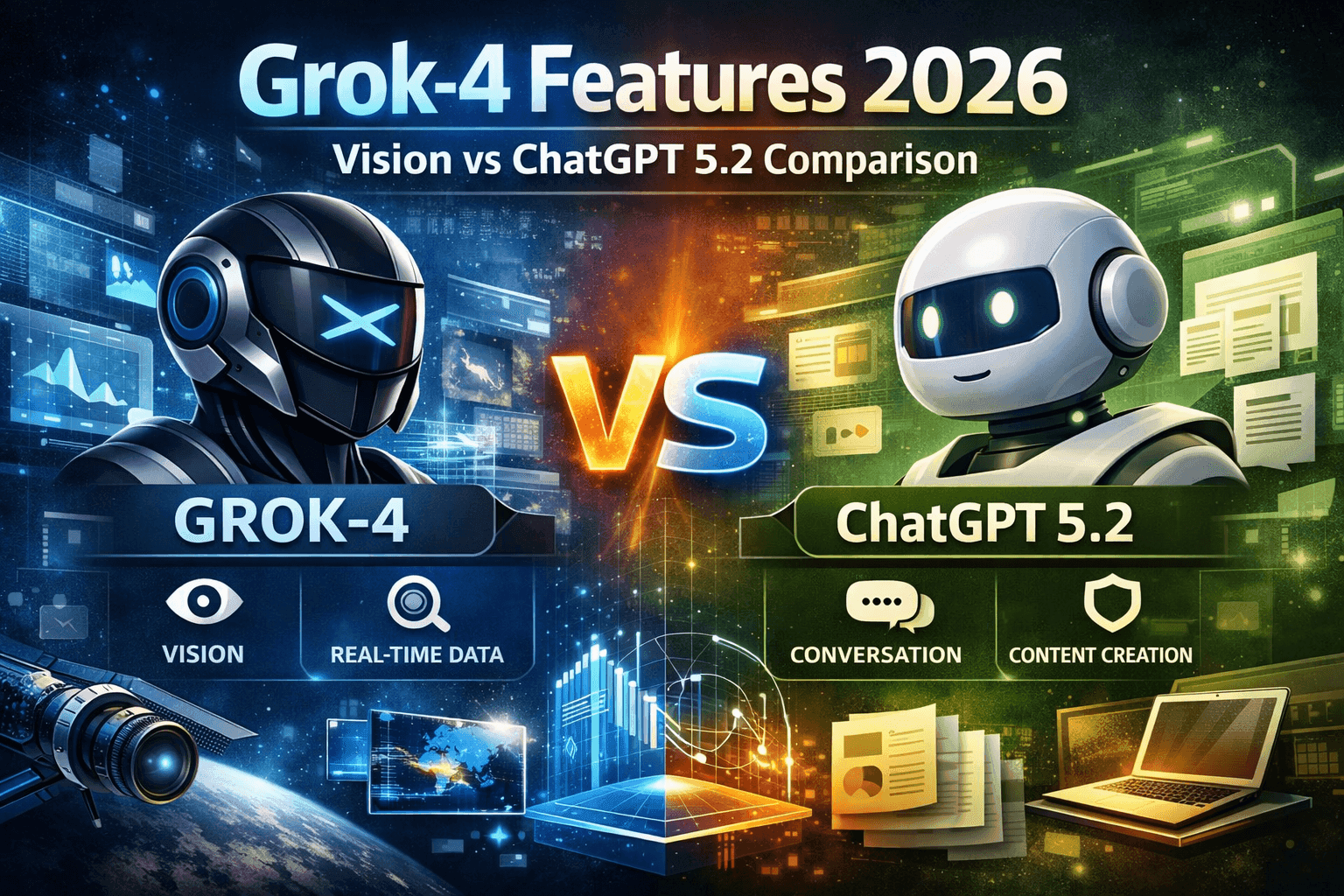
Deep dive compares Grok-4 and ChatGPT 5.2, highlighting their strengths, use cases, and differences.

Meta prompting and step-back prompting allow AI models to collaborate, boosting reasoning and reliability in complex tasks

Google Cloud now offers free access to advanced AI tools like Imagen, Speech-to-Text, enabling rich research and coding applications
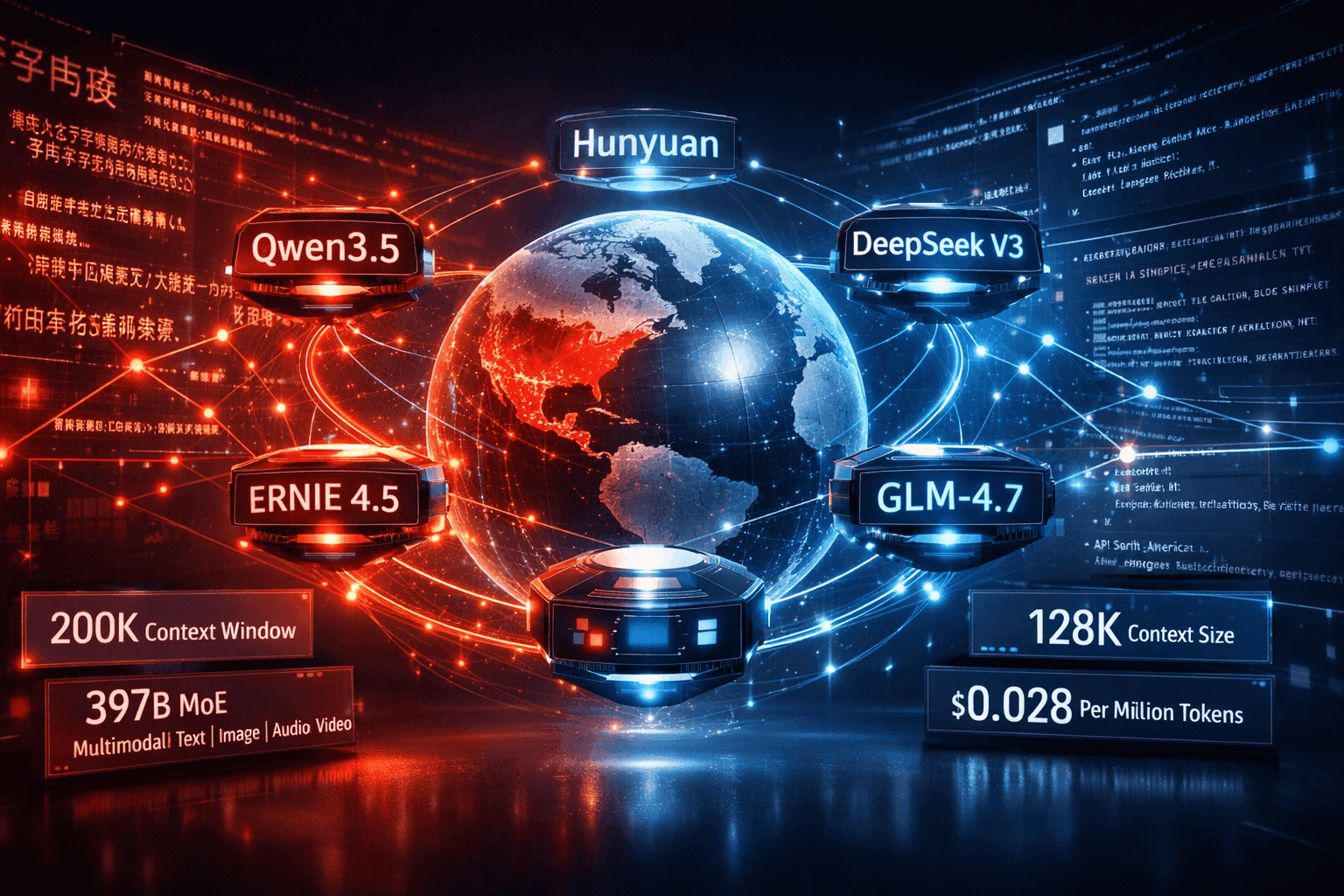
China LLMs 2026: Qwen vs DeepSeek vs ERNIE vs Hunyuan Compared

Stop collecting AI tools. Start building a system that works like a fractional employee-automate smarter, not harder.
Discover how ElevenLabs V3 enables teams to scale audio content globally with AI-powered dubbing, voice cloning, and sound effects
How to Use Perplexity AI: The Beginner's Guide (2026)

The Best AI Tools to Run a One-Person Business in 2026 (No Staff, No Code)

Muck Rack's 2026 journalism survey found 82% of journalists use AI, up from 77%. But concern about unchecked AI rose 8 points to 26%. Here is what the numbers mean for editorial teams.

GPT-5.4 shipped March 5, 2026 with native computer use, scoring 75% on real desktop tasks vs. 72.4% human baseline. Most people will prompt it like a chatbot. Here is how to actually get results.

WordPress.com added write access for AI agents in March 2026. After two weeks testing it for editorial drafts, it saves time on the parts you'd expect — and falls apart where it matters most.
Google released two AI memory migration tools on March 26, 2026 that let you move your ChatGPT or Claude context into Gemini as persistent memory. Here’s the workflow, the copy-paste prompt, and when to skip it.
Most AI users are still doing prompt engineering in 2026. Context engineering — feeding the right information at the right time — is the upgrade your workflow needs. Two copy-paste patterns included.

The early-user problem in B2B SaaS is solved by manual work, direct relationships, and ruthless prioritization — not marketing funnels or growth hacks. The tactics are well-documented and consistently replicated....

This report's twelve most important findings, ordered by importance to a solo or small-firm reader. Each is a standalone observation; the body of the report supports each in detail.

BestAIFor Research Report — version 1.0, 11 May 2026

We evaluated 15 AI tools for property managers in 2026 — only 4 publish a price you can act on without a sales call, and one is under active U.S. antitrust litigation. Download the full report.
We hand-curated and compared 15 AI tools for property managers in 2026 across leasing, maintenance, short-term rental, and all-in-one platforms — with verified pricing, the AI-in-entry-tier check, and honest pros and cons.

*By Daniele Antoniani · Last updated May 2026*

Restaurant operators face a specific kind of software sprawl problem. There's a POS for transactions, a separate scheduling tool for labor, a third platform for online ordering, and a fourth for reservations — and none of them talk to each other...

Real-time translation hardware used to be a curiosity — a crowdfunded earbud that half-worked on a good Wi-Fi day. In 2026 it's a real category, and the prices now run from about $23 to $699. We looked at 11 devices: 9 wearable earbuds and 2...

A typical small-animal vet writes SOAP notes for two to three hours of every clinical day. That's the bottleneck the AI vendors are aiming at — and in the last twelve months, the wedge has widened from a single category (the scribe) to five: AI...

A home robot is a piece of capital equipment that runs every day, breaks in ways you can't easily fix, and quietly maps the inside of your house. That's the frame I'd start with, not the spec sheet. The interesting question in 2026 isn't...

The 15 Asian AI×IoT vendors that matter for edge manufacturing in 2026, mapped by stack layer, pricing reality, and the operator's job each one solves.

The two platforms in this category that market hardest on artificial intelligence have no independent reviews at all.

Here's something odd about this market. A single click on "endpoint management software" costs an advertiser $371.37. That's not a typo, and it's not an outlier — "PSA software" runs $153.74 and "help desk software" $120.24. For comparison, we...

An investor managing 12 active SaaS portfolio companies surfaced a question circulating in startup communities: how do you track competitors at scale without a full-time analyst at every company? The tooling to solve...
Combining multiple AI coding tools into a unified workflow is delivering measurable productivity gains for developers who get the configuration right. The efficiency argument is real — but the integration overhead is...